Is the Trump meme coin a scam and what does the Senate fight over it reveal?
Need articles like this for your video? They help promote it on YouTube and Google — order them in the Telegram bot @sat_sit_bot. It writes articles around your video, embeds the video and publishes them on popular niche websites (no ads). Your first 50 articles are free.
· based on the channel Daniel Reed
Key takeaways
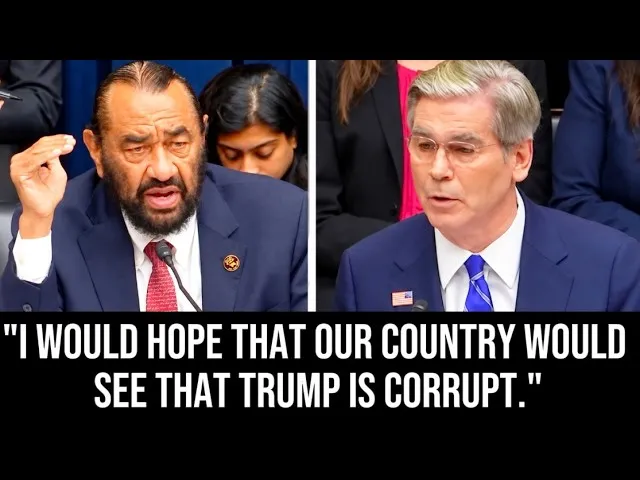
- Senator Al Green questioned Treasury Secretary Scott Bessent about the Trump meme coin and called it a scam during a Senate hearing.
- Bessent did not defend the token's economics, arguing the Treasury has no authority over how a private individual launches a meme coin.
- Meme coins have no cash flow, no claim on assets and rely entirely on the next buyer paying more than the last one.
- The hearing exposed a regulatory gap: tokens sold as collectibles can bypass securities disclosure rules.
- Crypto market structure legislation in Congress is the main lever that could change how meme coins are issued and marketed.
The Trump meme coin is a speculative token with no cash flow, no claim on assets and no business behind it, so its value depends entirely on someone else paying more later. At a Senate hearing, Senator Al Green grilled Treasury Secretary Scott Bessent over the token and described it as a scam, while Bessent declined to defend its economics and pointed to the limits of Treasury's authority over a private individual's crypto launch. That exchange is the clearest public illustration of the meme coin problem: the product is legal in most cases, the losses are real, and no single regulator clearly owns the issue.
What happened at the Al Green and Bessent hearing
Al Green used his questioning to force the Treasury Secretary to address the Trump meme coin directly, framing it as a transfer of money from ordinary buyers to insiders. Bessent's response followed a consistent line: Treasury oversees financial stability and tax policy, not the marketing choices of a private citizen's token, and the appropriate venue is Congress through crypto market structure legislation. The senator's framing — that a sitting president's family-branded token creates a conflict of interest — went largely unanswered on the merits rather than denied outright. The clip circulated widely because it captured both sides of the argument in a few minutes: outrage over the structure of the deal, and a bureaucratic shrug over who is supposed to stop it.
Why meme coins behave like a pyramid rather than an investment
A meme coin produces nothing, so every dollar of gain must come from a later buyer's dollar of loss. There is no revenue, no dividend, no treasury, no product roadmap that generates cash. The mechanics are simple and worth spelling out:
- Insiders and early wallets acquire tokens cheaply, often before public trading begins.
- Publicity — a celebrity name, a political brand, a viral post — pulls in retail buyers.
- Early holders sell into that demand, and the price falls back toward zero once new buyers stop arriving.
- Late buyers hold tokens that no one needs to buy back, because nothing obligates the issuer to do so.
This is why the comparison to a pyramid scheme keeps appearing in public debate: the payout to earlier participants is funded by later ones, not by any external value creation. A strict legal pyramid scheme requires a recruitment structure and promised returns, which most meme coins avoid on paper, but the economic shape is the same. The same logic applies to any token whose price rests on attention alone, whether it carries a politician's name or a cartoon dog's.
The disclosure gap the hearing exposed
Meme coins are usually sold as collectibles or entertainment, which lets issuers sidestep securities registration and its disclosure requirements. That classification is the crux of the dispute. A token marketed with a political brand can raise substantial sums from buyers who never see insider allocations, wallet concentration data or lock-up terms in a standard prospectus format. When a senator asks whether a token is a scam, the honest answer is that the structure is designed to make the question hard to answer in court: there is no promise of profit, no registered offering and no fiduciary duty to holders. What buyers get is a smart contract and a website.
Typical questions traders and viewers raise
Three recurring doubts come up whenever this topic trends. First, whether buying a political meme coin is a form of access or influence — some market participants argue the token is a loyalty signal rather than an investment, which makes the price even less tethered to fundamentals. Second, whether the money involved is being used to move value without the friction of regulated channels; that concern is speculative but explains why the hearing drew attention beyond crypto circles. Third, whether ordinary buyers should have known better — a fair point, since the mechanics are public, but not an argument that the product is safe or fairly marketed. The practical takeaway for traders is the same in every case: check wallet concentration, check whether insiders are locked up, and assume that any token with no cash flow can go to zero without anyone breaking a law.
How regulation could actually change meme coin launches
The lever that matters is market structure legislation, not Treasury commentary. Congress has been working on bills that would define which crypto assets are securities, impose disclosure and custody rules on exchanges, and give one agency clear authority over spot trading. If tokens sold as entertainment were brought into a disclosure regime, issuers would have to reveal insider allocations and promotional payments before launch. Whether that happens is a political question, and the hearing showed how far apart the two sides are: one treats the token as evidence of a conflict of interest at the top of government, the other treats it as a private transaction outside the Treasury's remit. Until rules change, the burden of due diligence sits entirely with the buyer.
What this means for anyone holding or buying meme coins
Treat any meme coin position as a lottery ticket sized so that a total loss is survivable. Concrete checks before buying: look at how much supply the top ten wallets control, confirm whether the team's tokens are locked and for how long, read whether the issuer can mint more tokens or change the contract, and check whether liquidity is locked. If the top wallets hold a large share of supply and there is no lock-up, the exit is designed for insiders, not for you. None of this makes a meme coin an investment; it only tells you how quickly you can be diluted or dumped on. The Senate exchange over the Trump token is a useful reminder that political attention cuts both ways — it pumps a token and it invites scrutiny that can end the trade.
Summary
The Al Green and Bessent exchange matters less for what it settled than for what it revealed: a token with no underlying value, buyers exposed to insider selling, and no regulator clearly responsible. Daniel Reed's breakdown of the hearing captures how the argument moves between conflict-of-interest accusations and jurisdictional deflection without either side engaging the economics of the token itself. For traders, the lesson is unchanged — meme coins are attention markets, and attention is the only asset they hold. Anyone buying should assume the downside is total and size positions accordingly.
Source: WHOA: Al Green GRILLS Bessent over Trump's meme coin “scam” · Markdown version
Questions & answers
Is the Trump meme coin legally a scam?
Not in the strict legal sense. A scam usually requires a false promise of profit or misappropriation, while meme coins are typically sold as collectibles with no return promised. The structure still transfers wealth from late buyers to early holders, which is why senators and commentators use the word even when no charge follows.
Why did Bessent refuse to condemn the token?
Bessent argued that Treasury has no authority over how a private individual launches a crypto token and that the policy fix belongs to Congress through market structure legislation. Defending or attacking the token's economics is outside his remit, so he redirected the question to the legislative process.
What should I check before buying a meme coin?
Check the share of supply held by the top wallets, whether team tokens are locked and for how long, whether the contract allows new minting, and whether liquidity is locked. High insider concentration with no lock-up means the launch is structured for insiders to exit first.
Could new crypto laws stop meme coin launches?
They are unlikely to ban them outright, but disclosure and market structure rules could force issuers to reveal insider allocations and promotional payments before launch. That would not remove the risk, but it would make the terms visible to buyers instead of buried in a contract.